The Van That Never Reached the Tip: Fly-Tipping, Duty of Care and the True Cost of a Cheap Clearance in Enfield
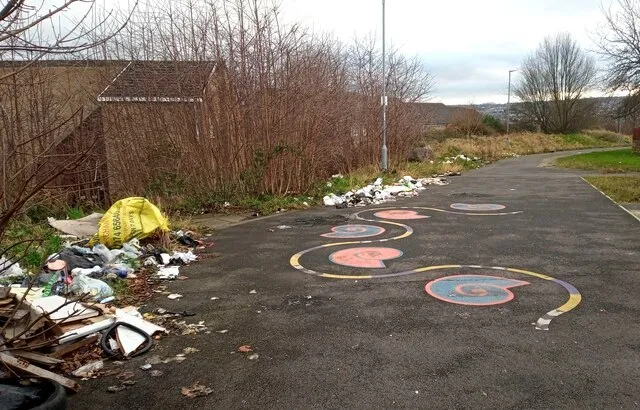
Photo: Stephen Armstrong , CC BY-SA 2.0, via Wikimedia Commons
Picture the scene, because it plays out most weekends somewhere in the borough. A mattress and a pile of black bags on a grass verge near a service road in Edmonton, or behind a parade of shops in Ponders End, or at the edge of a car park in Cockfosters. Someone has saved themselves sixty quid. Someone else is now looking at it every morning on the way to work.
Where fly-tipped waste gets traced back — a dumped bag with post, a receipt, an address on a box — the trail usually leads to a householder who genuinely believed they'd done the right thing. Their rubbish disappeared from the driveway. It just didn't reach a tip.
The journey your rubbish is supposed to take
A responsible clearance follows a fairly boring route. Waste is collected by a registered carrier, taken to a permitted site — a council reuse and recycling centre, a licensed transfer station — and sorted. Recyclables go into the recycling stream, bulky combustibles typically head for energy recovery, and only what's left goes to landfill.
Every step of that journey is documented, which is the whole point. Waste is a regulated material in the UK precisely because it's easy to make it vanish and hard to make it vanish legally.
Where it goes instead
When a quote looks too good, one of four things is usually happening. The load is being tipped somewhere convenient and free — a lay-by, a back lane, a farmer's gate. It's being stored in a yard or garage with no permit, waiting for a mythical future trip. It's being mixed into another company's load to hide it. Or it's going to an unlicensed site that takes anything for cash and asks no questions.
None of those outcomes involve your rubbish being handled properly, and all of them can be traced back to you through the same paper trail you didn't create.
Duty of care is a householder obligation, not a business one
This is the part most people miss. Under section 34 of the Environmental Protection Act 1990, anyone producing household waste has a legal duty to make sure it's only handed to an authorised person, and that it's accompanied by a written description. That applies to you standing in your own front garden with three bin bags, not just to shops and offices.
The practical version: check who you're giving it to, and keep proof. If your waste is later found dumped, the first question asked is who took it away and what documentation exists. 'He seemed nice and had a van' is not a defence.
Two minutes to check a licence
The Environment Agency keeps a public register of waste carriers, brokers and dealers. Search it online by company name or registration number and confirm three things: the registration is current, the name matches the person or business you're dealing with, and it's an upper tier registration. Lower tier registrations only cover someone carrying their own waste — not yours.
Ask for the registration number before you book, not on the morning of collection. A legitimate operator will have it to hand, usually on the quote, the website and the van. Also ask where the waste is going, and check that the destination holds a permit as a waste site if they run one. Two questions, honestly answered, tell you most of what you need to know.
The paperwork worth keeping
You should receive a waste transfer note — a short written description of the waste and confirmation of who's taking it and where. It costs nothing, takes a minute, and you should keep it for at least two years alongside the invoice. Any firm that treats this as an unreasonable request has told you everything.
A proper invoice matters too: date, description of the load, business name, address and carrier registration number. Cash in hand with nothing written down is the arrangement that ends up in a council investigation file.
What it costs when it goes wrong
Fixed penalties for household duty of care offences sit at up to £400 — roughly the price of a small clearance, and considerably more than the sixty quid saved on the dodgy quote. That's before enforcement costs, and before the separate offence of fly-tipping itself, which is prosecuted through the courts and can carry far heavier fines, costs and, in serious cases, a criminal record.
| What you did | What it can cost later |
|---|---|
| £80 cash, no name, no note | Up to £400 fixed penalty, plus investigation |
| £150 from a registered carrier | Nothing beyond the invoice |
Cheap rarely means efficient. It usually means someone has decided that the tip is optional.
If you see it happening, or find it
Report fly-tipping to Enfield Council through its online reporting form — location, type of waste, and a photo if you can take one safely. Note a vehicle registration only if you can do it without confrontation. Don't open bags or move anything that could be hazardous, and never touch drums, canisters or what looks like asbestos. For larger-scale or commercial dumping, the Environment Agency takes reports directly, and Crimestoppers exists for people who'd rather not be named.
Councils use CCTV, vehicle checks and doorstep enquiries, and they can require householders to explain what happened to their waste. Most of that work starts with a report from someone who lives nearby.
Five questions before you book anyone
Ask for the waste carrier registration number and check it yourself. Ask where the load is going. Ask whether you'll get a waste transfer note. Ask whether the price is fixed after they've seen the job. And ask what happens if they can't take everything on the day.
Anyone who answers all five clearly is worth the extra twenty quid. Anyone who dodges the first one isn't a saving — they're a liability with a tailgate.