Refits, Relocations and the Paper Trail: Commercial Waste Clearance for Enfield Businesses in 2026
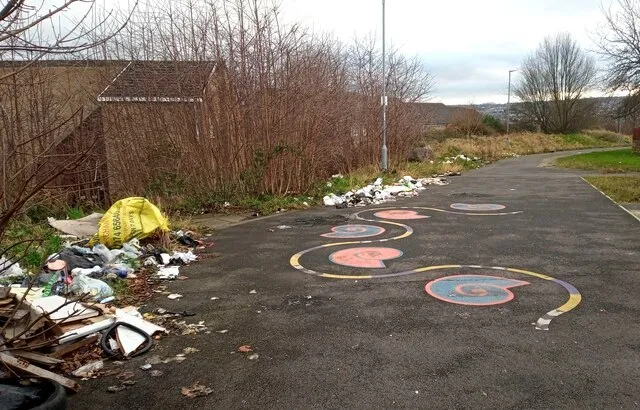
Photo: ad acta , CC BY-SA 2.0, via Wikimedia Commons
A refit is a good problem to have. It means investment, a fresh look, maybe a few more covers or a better layout. It also means a skip's worth of stripped-out shelving, dead fridges, torn-up carpet tiles and a counter that took four people to get through the door in 2011.
In Enfield, that backlog tends to appear in the same places: units along Church Street and London Road in Enfield Town, shopfronts in Palmers Green and Southgate, food businesses around Edmonton Green, small industrial units out towards Brimsdown and Ponders End. What follows is the practical version of what the regulations actually ask of you — and how to get a clearance done without losing trading days.
Duty of care, in two lines
Under Section 34 of the Environmental Protection Act 1990, your business has a duty of care for any waste it produces. In practice that means two things: you must hand your waste to a registered waste carrier or another authorised operator, and you must keep a written record of each transfer.
That's it. Everything else is detail — but the detail is where businesses get caught.
The waste transfer note is not paperwork theatre
Every load that leaves your premises should come with a waste transfer note. It records what the waste is, how much of it there was, where it went, who took it, and the carrier's registration number. You keep your copy for at least two years.
Why bother? Because a transfer note is the only thing standing between you and a conversation you really don't want to have. If waste removed from your shop later turns up dumped in a lay-by near Forty Hall, the note is what proves you did the right thing. Without it, the trail stops at you.
There's also a fixed penalty regime for failing to produce documentation on request — currently a few hundred pounds in England, with unlimited fines available in the more serious cases that reach court. For a small venue, that's a week's takings for a piece of paper nobody thought to ask for.
One more thing worth knowing: the move towards digital waste tracking is coming. Keeping clean, structured records now makes that transition a great deal less painful.
What a legitimate commercial clearance looks like
You can usually tell within five minutes whether the firm you're talking to is properly set up. Ask for:
- Waste carrier registration, upper tier, with a number you can check on the Environment Agency's public register.
- A written quote that names the waste types covered — general, bulky, WEEE, hazardous if relevant.
- Confirmation of where the waste is going, by name, not just "the tip".
- A waste transfer note issued as standard, not on request.
- Public liability insurance — relevant the moment someone is carrying a fridge down your fire escape.
Anyone reluctant to put those in writing is telling you something useful.
Where the fine actually lands
There's a persistent belief among small business owners that fly-tipping is the van driver's problem. It isn't. If you pay someone to take away your waste and they dump it, the offence may well be theirs — but the investigation starts with your rubbish and ends with reputational damage and enforcement attention on your door.
In practice, the sequence is usually: your branded packaging or a delivery note is found in a fly-tip, enforcement officers trace it back, and you're asked some very direct questions about who took it and what documentation you hold. A licensed clearance with proper notes ends that conversation immediately. A cash-in-hand arrangement with a man in an unmarked Transit does the opposite.
For hospitality venues there's an added layer: used cooking oil, glass and food waste all have their own routes, and a general clearance isn't the right vehicle for any of them.
The out-of-hours advantage
Most Enfield high streets are unforgiving during trading hours. Loading bays are contested, parking restrictions bite, and a clearance van blocking a delivery slot at 11am is a problem you'll hear about.
That's why most sensible refits are scheduled around the business rather than through it:
- Early mornings before opening, or evenings after last orders, for anything that has to pass through the front of the unit.
- Overnight or weekend slots for larger strip-outs, when neighbouring flats above the shop aren't trying to sleep and the street is quiet.
- Staged removal — shelving and stock one day, fixtures and flooring the next — if a full clear-out in one hit isn't realistic.
Good clearance teams will work to your schedule rather than the other way round. If a firm can only offer "Tuesday, sometime between eight and six", that tells you how the rest of the job will go.
The shared-bin trap
Small businesses in mixed-use buildings often share a bin store with the flats above, and it's tempting to quietly top up the domestic bins during a refit. Don't. Commercial waste going into a domestic waste stream is a classic source of friction with the council and with whoever pays for that bin.
Equally, don't book a household-style clearance for commercial waste. It's a different service, priced differently, and a reputable operator will refuse the load — usually after the van has arrived.
A refit sequence that works
- Book the clearance before the fitters. Dates move; the clearance should flex with them, not the other way round.
- Clear the back-of-house first. Store rooms, cellars and yards tend to hold the bulky, awkward stuff. Getting it out early frees up space for the new kit.
- Separate as you strip. Metals, cardboard, WEEE and general waste going into distinct piles saves handling later and improves what can be recycled.
- Photograph the empty unit. Useful for the landlord, useful for the deposit conversation, useful if anyone questions what was removed.
- File the transfer notes in the same place you keep your insurance and your gas safety certificate. Two years, minimum.
Before you sign anything
Check the registration number, get the waste types named in the quote, confirm the disposal point, and make sure the transfer note is coming without you having to chase it. It takes five minutes and it's the difference between a clean refit and an expensive lesson.
A tidy back yard at the end of it is the least you should expect.