The Bulky Waste Blind Spot: What Enfield's Council Crews Can't Cart Away in 2026
Photo: HendrixHammer, CC BY-SA 4.0, via Wikimedia Commons
Enfield Council's bulky waste service is a useful safety valve. It is not, however, a magic wand. Every year, households book a collection, put out a pile that includes a mattress, a broken wardrobe and a few bags of DIY offcuts, and then wonder why half of it is still there at the end of the day.
In 2026, the rules and charges can change, so always check the current Enfield Council page before you book. But the pattern is familiar: some items are accepted, some are accepted only with conditions, and some need a specialist licensed remover. Here's the practical version.
What council bulky collections are for
Bulky waste collections are designed for large household items that won't fit in your normal bin. Think beds, sofas, wardrobes, tables and some appliances. You usually need to book in advance, and there is often a charge per item or per collection. The crew will only take what you've declared, so don't add extra bags on the day and hope for the best.
A council collection is not the same as a house clearance. It won't usually cover a garage full of mixed junk, building materials or hazardous waste. That distinction is where most confusion starts.
The items that cause the most trouble
Mattresses
Mattresses are bulky, awkward and often excluded from charity donations for hygiene reasons. Some councils collect them as part of a bulky waste booking, sometimes at an extra cost. Others won't take them at all. Don't assume the bin crew will take one just because it's beside the bin. If you're buying a new mattress, ask the retailer about take-back options. If not, book the right collection or use a licensed remover.
MDF and flat-pack furniture
MDF wardrobes, cheap desks and flat-pack chests are heavy, prone to swelling and difficult to recycle. A council bulky collection may take them as furniture, but only if they're listed correctly. Broken MDF offcuts and bags of sawdust are usually treated as DIY waste, not household bulky waste. Dismantle what you can, bag the small pieces and keep them separate from the main pile.
Plasterboard and DIY waste
This is a big one. Plasterboard contains gypsum, and it needs separate handling at permitted facilities. It should not go in your normal bin, and many council bulky collections won't take it. The same goes for bricks, rubble, tiles and fencing. If you've had a bathroom refit or a shed knocked down, you're dealing with construction waste, not a standard household collection.
Garden waste
Garden waste is often collected through a separate subscription service or taken to a recycling centre. It usually isn't part of a bulky waste booking. If you've cut back a hedge or cleared a shed, don't stuff the cuttings into the wheelie bin and hope nobody notices. Book the right service or compost what you can at home.
Electricals and old appliances
Old TVs, microwaves, kettles and fridges are classed as electrical waste. Many retailers offer take-back schemes, and recycling centres accept a wide range of electricals. Fridges and freezers need special handling because of the gases inside. Never put them in the general waste, and don't hand them to a random van that promises to 'sort it out'.
Paint, chemicals and mystery liquids
Paint tins, solvents, garden chemicals and gas canisters are hazardous waste. They don't belong in a bulky collection, and they definitely don't belong in a cheap van's boot unless that van is licensed to handle them. If you're clearing a garage and find unlabelled containers, stop and get advice. Your local recycling centre can tell you what it accepts.
The mystery garage problem
Garages are where good intentions go to die. They fill up with part-used paint, broken tools, old bikes, camping gear and boxes nobody has opened since 2019. A council bulky collection can't handle that mixed load, and a single van may not be enough.
The sensible approach is to sort first. Put usable items in one pile for donation, hazardous items in another for specialist disposal, and bulky furniture in a third for a licensed clearance. Don't let anyone load a mystery garage into an unmarked van without a written quote and a waste transfer note.
Why 'just leave it out' backfires
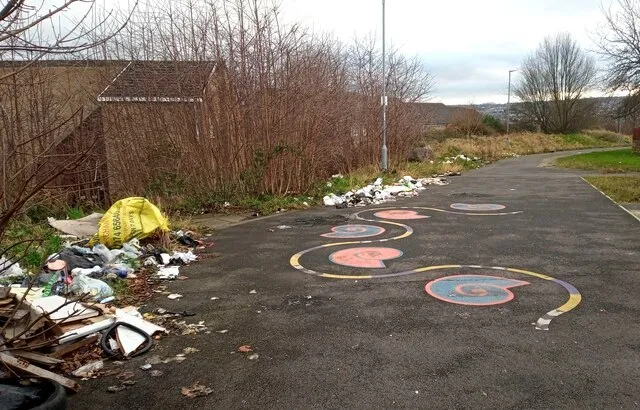
Leaving items on the pavement before a collection is booked is fly-tipping, even if you plan to move them later. In busy parts of Enfield, enforcement officers know the usual hotspots. A fixed penalty notice can cost far more than a proper collection, and it's a miserable way to end a house move.
If you're booking a council collection, put items out only when the instructions say so. If you're using a licensed remover, ask them to collect from inside the property or from a safe spot on your driveway. Keep the pavement clear for neighbours, buggies and wheelchairs.
When to call a licensed remover
A licensed waste carrier is worth considering when you have a mixed load, heavy items, limited access or a tight deadline. Ask for their waste carrier registration number, get a written quote and insist on a waste transfer note or receipt. A legitimate operator will be happy to explain where the waste is going.
Be wary of anyone who offers a very cheap price, wants cash only and can't produce paperwork. If your rubbish ends up fly-tipped in a lay-by, the trail can lead back to you. Under duty of care rules, households are expected to check that waste is being taken by a registered carrier.
A simple 2026 clearance plan
- List the big items and check Enfield Council's current bulky waste rules.
- Separate hazardous waste, electricals and garden waste.
- Donate or recycle anything usable.
- Book a council collection for standard bulky items if it fits.
- Use a licensed remover for mixed, heavy or specialist loads.
- Keep quotes, receipts and waste transfer notes.
Council collections are great for a few standard items. They're not built for a garage purge, a full house clearance or a pile of plasterboard. Once you know what they won't take, planning a compliant clearance in Enfield becomes a lot less mysterious.