The Garage's Nasty Half-Hour: A 2026 Hazardous Waste Audit for Enfield Clearances
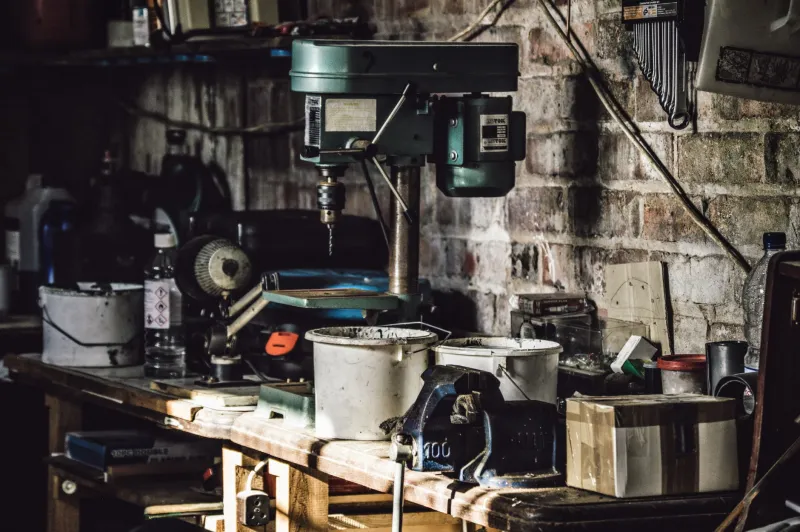
A garage clearance usually starts with the obvious stuff: bikes nobody rides, a lawnmower that last worked during a different decade, boxes of screws, and at least one tin of paint that has been sitting on the same shelf since before the kids left home. But the awkward part of an Enfield garage clearance is rarely the bulk. It is the small, heavy, half-empty and sometimes leaking stuff that cannot go into a skip, a kerbside collection or a black bag.
That is not a reason to panic. It is a reason to do a sensible sweep before booking anyone. In 2026, licensed clearance crews are used to dealing with household hazardous waste, but they need to know what they are walking into — and homeowners need to know what will be taken, what will be refused, and what paperwork should follow.
Why the garage is the risky room
Garages and sheds collect chemicals because they are useful for about four minutes a year and then get stored indefinitely. A tin of wood stain, a bottle of weedkiller, a can of brake fluid, a camping gas cylinder, an old aerosol of spray paint: none of these are unusual. Put together in a damp garage, though, they can rust, leak, pressurise or lose their labels.
That matters because ordinary waste crews are not set up to handle them. A skip is for bulky non-hazardous waste, not a chemistry set. Kerbside collections are not designed for liquids, gas or unknown chemicals. If hazardous items are hidden in a general load, they can contaminate the rest of the waste, cause a fire in the back of a van, or injure the people unloading it. A responsible clearance company will separate them, store them properly and send them to a permitted disposal route.
The usual suspects in an Enfield garage
Paint, varnish and thinners
Liquid paint, wood preservative, varnish, paint stripper and thinners are the classic garage offenders. They should not be tipped down a drain, poured onto a flowerbed or left in a general waste bag. Even a half-full tin with a rusty lid can leak in transit. Spray paint aerosols are worse: they are pressurised and can explode if crushed.
Fully hardened paint is a different conversation from liquid paint, but do not assume. If a tin still sloshes, treat it as hazardous. If you cannot tell, let the crew decide rather than putting it in the van-load yourself.
Gas cylinders and propane bottles
Patio heaters, camping stoves, blowtorches and old barbecue cylinders often lurk at the back of garages. These should never go into a skip or a general waste load. Many suppliers operate a return or exchange scheme, and specialist disposal is the fallback. Do not puncture, crush or “test” a cylinder that has been sitting around for years.
Garden chemicals and pesticides
Weedkiller, slug pellets, insect spray, plant food and unlabelled bottles of green liquid are common shed residents. Products can become unstable or leak, and mixing them together is a bad idea. Keep them upright, keep them in their original containers where possible, and do not decant them into drinks bottles. That last point sounds obvious until you find a garage where it has happened.
Oils, fuels and automotive fluids
Engine oil, petrol, diesel, antifreeze, brake fluid and old mower fuel all need specialist handling. Petrol is especially risky in a clearance because it is flammable and evaporates. Do not pour it away, and do not add it to a general waste load.
Aerosols, solvents and adhesives
WD-40, contact adhesive, paint stripper, lighter fluid and old solvents often sit alongside the paint. Aerosols can be hazardous if they are not empty, and solvent containers can give off fumes. Keep them out of black bags and away from heat.
Batteries and fluorescent tubes
Old car batteries, tool batteries and fluorescent tubes turn up in garages too. Lithium batteries from power tools are a fire risk if damaged or crushed. Car batteries contain acid and lead. These are not general waste items.
Asbestos — the one to leave alone
If an old garage roof, boiler cupboard or shed panel might contain asbestos, do not break it up, sweep it or put it in a skip. Stop and get specialist advice. This is less common than paint and gas cylinders, but it is the item where a casual approach can become genuinely expensive.
How licensed crews deal with the awkward stuff
A proper clearance crew will not just chuck hazardous items into the same pile as old shelving. They should separate liquids from solids, keep incompatible chemicals apart, use suitable containers, and avoid anything that could leak or ignite in transit. Some items can be accepted at a household waste recycling centre; others need a specialist disposal route. Gas cylinders may need to go back through a supplier or a permitted facility.
There should also be a paper trail. Ask what documentation you will receive for the waste. For ordinary household waste, a waste transfer note is the standard record. For hazardous items, ask how they are recorded and where they are going. A licensed operator should be able to explain the route without getting vague.
What to check before booking a garage clearance in 2026
1. Check the waste carrier registration
In the UK, businesses that collect and carry waste should be registered with the Environment Agency as waste carriers. Ask for the registration number and check it. A cheap van and a friendly manner are not a licence.
2. Ask about hazardous items upfront
Tell the company if you have paint, gas cylinders, pesticides, oils or unknown chemicals. Ask whether they can take them, whether there is an extra charge, and what they cannot accept. A quote that assumes a garage is full of cardboard and old bikes is not a real quote.
3. Get exclusions in writing
Hazardous waste is often priced separately because disposal costs are different. That is fair enough. What is not fair is discovering on the day that the price did not include the very items that made the job awkward.
4. Ask where the waste goes
A legitimate operator should be able to say which permitted site or facility handles the different streams. “It all goes to the tip” is not a detailed answer when gas cylinders and paint are involved.
5. Be wary of “we take anything”
No responsible clearance company takes literally anything without asking questions. A willingness to take unlabelled chemicals, gas bottles and leaking containers with no discussion is a red flag, not a bargain.
A five-minute sweep before the crew arrives
Put on gloves, use a torch, and do not open unknown containers. Keep bottles upright. Ventilate the garage if it smells of solvent or fuel. Photograph labels where you can, and put the risky items together on a tray or in a crate so the crew can see them. Keep gas cylinders outside, away from heat, if it is safe to move them. Do not put hazardous items in black bags to “deal with later”.
If something is leaking, do not move it far. If it is unlabelled, do not sniff it to identify it. If it might be asbestos, leave it alone.
The bottom line for Enfield households
A garage clearance is not just a test of muscle. It is a small hazardous waste audit. The paint tins, propane bottles and garden chemicals at the back of the garage are exactly the items that make the difference between a tidy clearance and a messy, risky one. Ask the right questions, pay for proper disposal, and keep the paperwork. That is how a garage gets cleared without creating a problem for the crew, the recycling centre or the next person who uses the road.