When Gravity Wins: Getting Pianos, Safes and Gym Kit Out of Enfield Homes
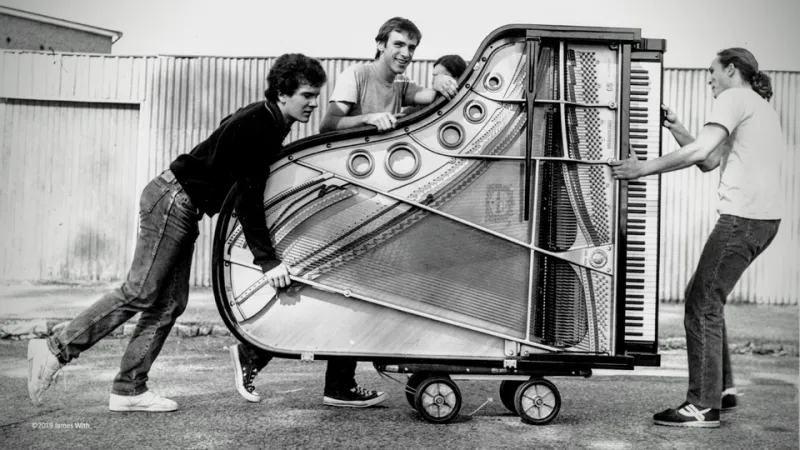
Photo: Elizabeth Janet Wearing-Smith, CC BY-SA 4.0, via Wikimedia Commons
Some clearances are about volume. This one is about gravity. A piano, a gun safe or a treadmill can turn a straightforward Enfield house clearance into a puzzle involving doorways, stair turns, floorboards and a very real risk of injury. The good news is that heavy items are usually manageable when you plan the route before you plan the muscle.
Measure the route, not just the object
It is tempting to look at a piano and think only about its weight. The more important question is whether it will physically pass through the house. Walk the route from the item to the van and note every pinch point: front doors, hallway turns, stair bends, landing windows, garden gates and any step down to the pavement.
Enfield has a real mix of housing. A Victorian terrace may have a narrow hall and a tight turn at the top of the stairs. A 1930s semi might offer a wider hallway but a awkward side return. A flat may involve communal stairs, a lift that is smaller than it looks, or a shared entrance where you cannot leave doors propped open. Measure doorways at their narrowest point, including the frame and any protruding handles. For pianos and safes, measure depth as well as width — an item can be slim enough for the door but too deep to pivot in a hallway.
Also check the outside route. Is there off-street parking, or will the crew need to carry an item across a pavement and up a kerb? In some Enfield streets, a parking suspension may be sensible for a large van or a piano van. If you live in a flat, ask about lift dimensions and any booking requirements for communal areas.
The two-person rule has a ceiling
Two strong people can move a sofa. Two strong people should not be moving a cast-iron piano frame or a fireproof safe down a staircase. The limit is not just weight; it is control. Once an item is too bulky to grip properly, too tall to tilt, or too heavy to stop if it starts to slide, extra hands are not the answer — different equipment is.
A piano can weigh anywhere from around 200kg for a small upright to substantially more for a grand. Safes can be deceptively dense, especially smaller models filled with fireproof material. Treadmills are not always enormous, but they are long, top-heavy and fitted with motors and belts that make them awkward to carry.
If you are unsure, stop. A back injury or a damaged staircase costs far more than a professional heavy-item lift.
Protect the house as well as your back
Heavy-item removals damage houses in predictable ways: scuffed corners, torn wallpaper, cracked plaster, chipped stair treads and banisters pulled loose. Before anything moves, protect the route. Hardboard or heavy-duty floor protection is useful on vulnerable flooring, while cardboard and dust sheets can guard skirting boards and corners. Stair treads benefit from a runner or secured protection, and door frames can be taped or padded.
Do not remove doors unless you know how to refit them safely, and never compromise a banister or fire door. If a door has to come off its hinges, label the fixings and keep them together. Also think about fire safety: do not block escape routes for longer than necessary, especially in flats or shared buildings.
Pianos need a specialist, not a hopeful crew
Pianos are musical instruments, furniture and heavy machinery in one. The internal cast-iron plate, strings and tuning pins are under enormous tension, and tipping or dropping a piano can damage it beyond repair. Stair work is particularly risky. A piano mover will use skates, straps, stair-climbing equipment and knowledge of how to balance the load.
If the piano is going to be reused, start early. Schools, community groups, churches and music charities sometimes want pianos, but they usually need to inspect them first and may not accept instruments that cannot hold tuning. A licensed clearance company can help separate the reuse question from the removal question. If the piano is beyond use, it still needs to go through a proper waste route rather than being fly-tipped or left on a pavement.
Safes are heavier than they look
A safe is one of those items where the weight is concentrated in a small footprint, which makes it hard to grip and easy to drop. Many are bolted to floors or walls, and some are hidden inside cupboards. Before removal, confirm that you have the right to take it, that it is empty, and that you have keys or the combination. If it is bolted down, the fixings need to be dealt with properly so the floor or wall is not left unsafe.
Specialist safe movers use pallet trucks, stair climbers and lifting straps. A domestic safe that has been in place for years may also have seized fixings or a rusted base. Do not attempt to drag it across a floor without protection; the weight can gouge wood and tear vinyl.
Gym kit: long, top-heavy and electrical
Treadmills, rowing machines and multi-gyms are often more awkward than heavy. Many can be partly dismantled, which makes them easier to move and better for recycling. Keep the fixings in a bag, photograph the assembly before you take it apart, and separate metal, plastic and electrical components where possible. Treadmills and other powered gym equipment fall under electrical waste rules, so they should go through a licensed route rather than a general skip.
If the equipment is in good condition, reuse is worth exploring. Local sports clubs, community centres or online marketplaces may take it, but be honest about condition and be prepared to help with loading. A clearance crew can remove it for you if reuse does not work out.
When to call in a licensed crew
For anything that needs more than two people, specialist lifting equipment or stair work, a licensed clearance company is the sensible option. In the UK, anyone removing waste commercially should be able to show a waste carrier registration, and you should receive a waste transfer note. A written quote should set out what is included, how the item will be removed and where it will go. If a price seems unusually cheap for a piano or safe, ask where it is being taken.
For Enfield households, the practical day-of plan is simple: clear the route, protect the floors, move vehicles if needed, keep children and pets away from the working area, and confirm the crew knows about any tight turns or bolted fixings. Heavy-item clearance is not about heroics. It is about measuring twice, using the right kit and making sure the only thing that leaves the house is the item — not half the staircase.