Twelve Months of Rent, One Van's Worth of Stuff: Auditing an Enfield Storage Unit
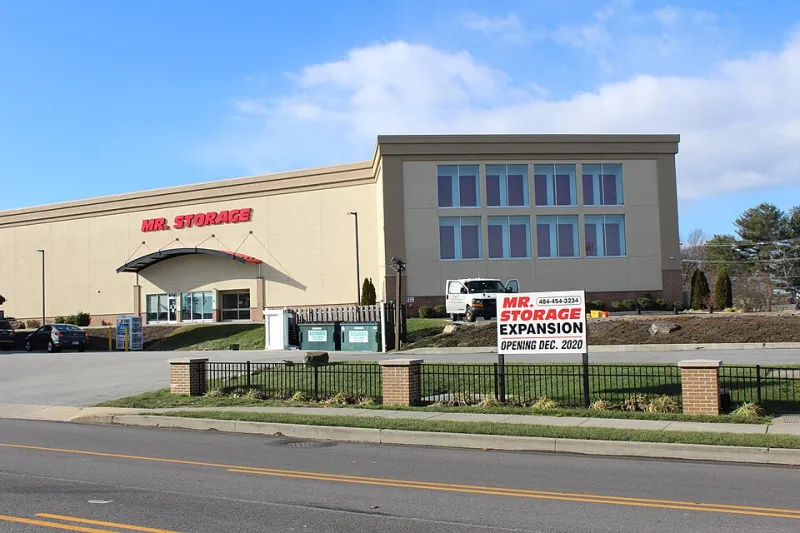
Photo: Dwkaminski, CC BY-SA 4.0, via Wikimedia Commons
Somewhere on an industrial estate off the Great Cambridge Road, there's a 50 square foot unit holding a two-seater sofa nobody sits on, a tumble dryer that trips the fuse board, and eleven boxes labelled 'MISC'. It has been rented since 2022. The direct debit goes out on the 3rd and nobody in the family has thought about it since roughly the same time.
If that sounds familiar, you're in good company. Storage is one of those costs that's easy to start and oddly hard to stop. You take a unit for six weeks during a house move, then the six weeks becomes a year, and the year becomes a standing arrangement you've stopped questioning.
This is a plan for ending that arrangement without a meltdown.
The cost you've stopped noticing
Storage pricing in and around Enfield varies with size, location and how long you sign up for, but the pattern is consistent. A small unit — enough for a few pieces of furniture and a stack of boxes — tends to sit somewhere between £90 and £180 a month depending on whether you want drive-up access, ground floor, or a lift to the third floor of a converted warehouse. Bigger units for a whole flat's worth of contents run higher still.
Take the middle of that range and you're looking at well over £1,000 a year. Over three years, you're into several thousand pounds — for the privilege of keeping things you haven't looked at. Compare that with a one-off licensed clearance of the same contents, which for a typical part-full unit usually lands in the low hundreds once you've accounted for the volume, the awkward items and the disposal fees. The clearance is a payment. The storage is a subscription, and subscriptions are designed to be forgotten.
Here's the useful question: if I handed you the contents of that unit today, free, would you pay £1,500 for them? Most people say no within about four seconds.
Do the maths before you open the door
Before you go near the unit, work out three numbers.
Annual rent. Monthly cost times twelve. Write it down.
Months held. Be honest about how long it's actually been.
Replacement cost of what's inside. Not what you paid originally — what it would cost to buy the same thing second-hand this weekend. Most stored furniture depreciates brutally. That oak sideboard is worth what someone in Palmers Green will pay on a marketplace listing, and that's rarely more than £40.
When the total rent exceeds the replacement value of the contents, you don't have a storage problem any more. You have a disposal problem with a monthly fee attached.
Three passes, not one marathon
The mistake people make is booking a van, arriving at the unit and trying to sort everything in one go. That's how a two-hour job becomes six, and how half the contents end up back in a new unit because nobody could face a decision at 4pm.
Instead, do three passes.
Pass one: the survey. No van, no boxes to fill. Just you, a notepad and your phone camera. Open the door, photograph everything in place, and write down categories rather than individual items: 'sofa', 'boxes of kitchen stuff', 'bike', 'that chest of drawers from Mum's'. Twenty minutes, maximum. Then leave.
Pass two: the triage. Back home, look at the photos and mark each category as keep, donate, sell or clear. Be blunt. Anything you can't identify from the photo is almost certainly 'clear' — if you don't know what's in the box, you don't need what's in the box.
Pass three: the execution. Now you book the access, bring the right number of bags and boxes, and work to the list you already made. Everything has a destination before you arrive, which is what turns a miserable day into a manageable one.
The keep-or-clear test that actually works
Three rules cover nearly everything.
The twelve-month rule. If it hasn't been used, worn, opened or needed in a year, and it isn't seasonal or sentimental, it goes. Christmas decorations and a box of your nan's letters get a pass. A bread maker gets a hard no.
The replacement test. If you cleared it and later needed one, could you buy a decent second-hand replacement for less than three months of storage rent? If yes, it isn't worth storing.
The 'would I pay to move it' test. Imagine you were moving house tomorrow and paying a removals firm by the hour. Would you carry this item down three flights and pay for the privilege? Anything that fails that test fails the storage test too.
Access, lifts and the loading bay clock
Enfield's storage sites have their own quirks, and they'll shape how you plan the day. Units in the Ponders End and Brimsdown industrial estates often have ground-floor drive-up access, which is the easiest scenario — you can park beside the shutter and work steadily. Facilities closer to Enfield Town or Southgate are more likely to be multi-storey, with goods lifts, trolleys and a shared loading bay that you book in slots.
Book the loading bay before you book the van. Turn up with a hired Transit and no bay slot and you'll be circling the estate while your hire clock runs. Check the lift dimensions against your biggest item — a sofa will not go in a passenger lift, and a stair carry down three levels of a warehouse is a job for two people with straps, not one person with optimism.
If you're moving contents from a house in Winchmore Hill or Bush Hill Park to the unit and then out again, remember the other end has the same constraints: narrow hallways, front steps, a dropped kerb or not, permit parking on the day.
The awkward stuff is where cheap quotes die
Some of what's in a long-held unit can't go in a normal van and shouldn't be fly-tipped by the side of a quiet road in Edmonton. Fridges and freezers need proper handling. Mattresses and upholstered furniture are treated differently from hard furniture at most disposal points. Paint tins, aerosols, old fuel cans and anything with a lithium battery in it — scooters, power tool packs, that drawer of unknown chargers — need separating out and disposing of correctly.
This is also the moment to check who's taking it away. Anyone removing waste from you is legally obliged to be registered as a waste carrier, and you're entitled to ask for the registration number and a waste transfer note. A cheap quote that ends with your unit's contents in a lay-by is a fine on you, not on them.
When to call it
If the audit comes back with more than a van's worth of genuine keeps, or if the unit contains heavy, awkward or hazardous items you'd rather not handle yourself, a licensed clearance crew is usually cheaper than a second month's rent plus a hire van plus a tip run plus a Saturday you'll never get back.
The unit isn't the problem. The unit is just where the problem has been quietly sitting, charging you for the privilege. Once you've done the survey and the triage, the rest is logistics — and logistics, unlike that box marked 'MISC', can be planned.